Sarasota, Florida · March 5–7, 2026
What Happened to Teddy
Eighteen hours of preventable suffering for our dog at BluePearl Veterinary Hospital, Sarasota. Lasting trauma for our family. Why our family believes financial considerations may have influenced the treatment options presented to us.
By Mary Lawlor · Published May 2026
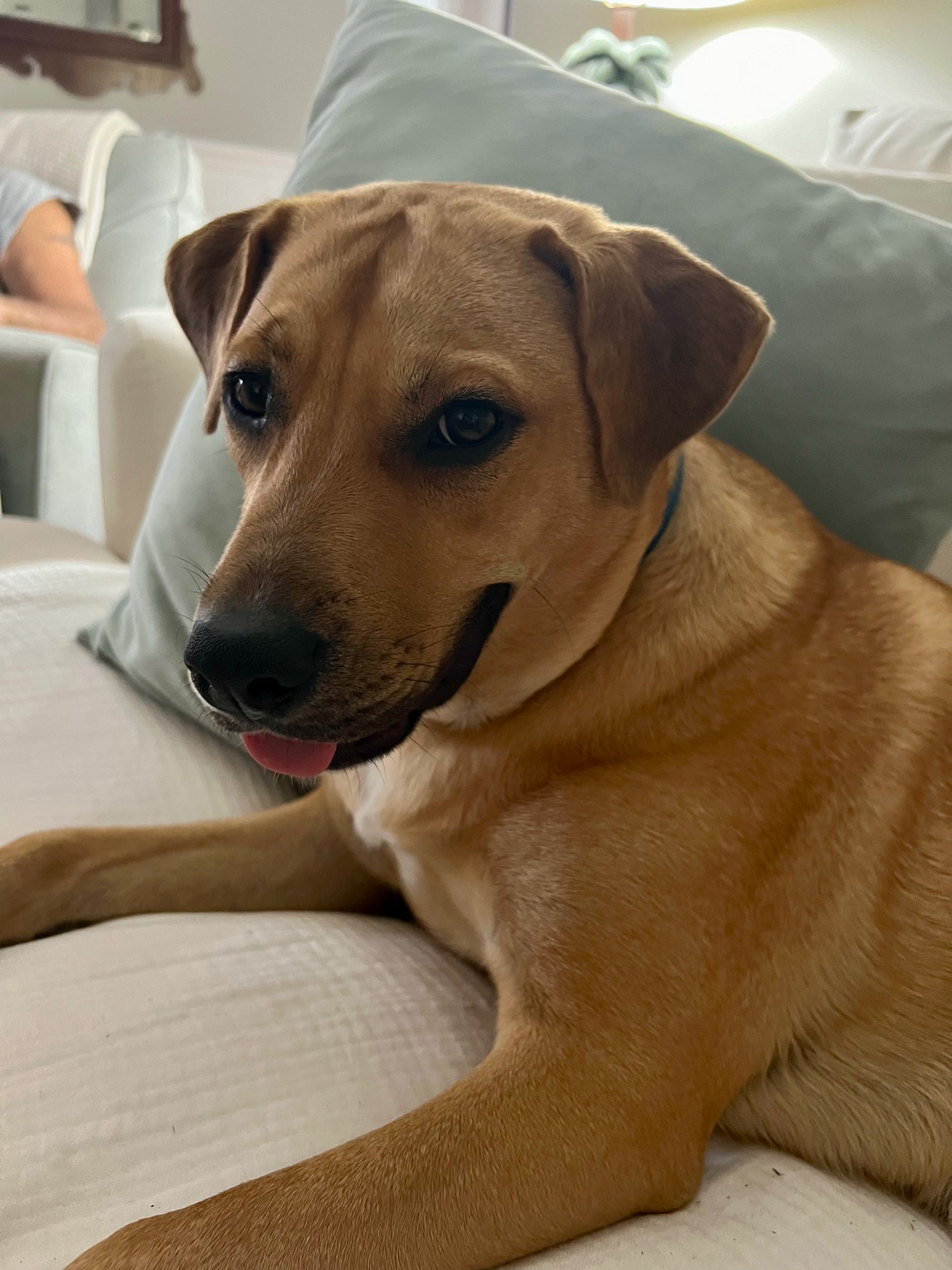
A note before you read
Every fact on this page is documented. The medical records are BluePearl's own. The emails are BluePearl's own. The cremation invoice is BluePearl's own. The clinical summary corroborating what should have happened was written by Dr. Chris Levine, DACVIM — the same external veterinary neurologist BluePearl consulted during Teddy's hospitalization. The same physician on both ends of the consult has now written, in a clinical record, what was recommended and what was not initially communicated.
The documentation is available to anyone who asks.
Why we created this website
This website reflects our family's experience, opinions, and conclusions based on medical records, invoices, emails, written communications, and other documentation in our possession. Readers are encouraged to review the information presented and draw their own conclusions.
We created Teddy's Story as a public-service website because we never want another family to experience the fear, desperation, and heartbreak we felt while trying to help a beloved pet in crisis. After watching Teddy suffer and decline for hours, we learned from the next veterinarian on duty that a treatment recommended by consulting specialists had been reflected in his chart for approximately 18 hours but had not been communicated to us. Had we been told about that treatment option when it was recommended, we would have chosen it immediately.
Our hope is that Teddy's Story helps other pet owners become informed advocates for the animals they love by encouraging them to ask questions, request complete information about their pet's condition and treatment options, and actively participate in decisions affecting their pet's care. Based on our family's experience, we also encourage pet owners to consider privately owned emergency veterinary hospitals whenever one is available.
The stories shared by other families at the bottom of this website are an important part of Teddy's Story. Every family's experience is unique, but by sharing our stories we hope to educate, inform, and empower other pet owners so they can make the best possible decisions for the animals they love.
If Teddy's Story helps even one family avoid the heartbreak we experienced — or helps one beloved pet receive timely treatment because an owner knew what questions to ask — then sharing Teddy's story will have been worthwhile.
UPDATE — June 21, 2026 In preparing our formal complaint to the Florida Veterinary Medical Board, which is quite a project, our family went through Teddy's medical records meticulously, line by line. That careful review revealed several factual details that needed correction — small timing details, more precise quotes from the medical records, and clearer framing of what is our opinion versus what is documented fact. Those corrections have been made. We are committed to keeping this account 100% accurate to the documented record. Any future corrections will be noted here. The substance of what happened to Teddy has not changed. What has changed is the precision with which we describe it.
Meet Teddy
Teddy in aquatic physical therapy, rebuilding strength after his rescue
Teddy is a 2.5-year-old mixed-breed dog — Blackmouth Cur and Rhodesian Ridgeback — and he has already survived more than most dogs ever will.
He was surrendered to the Sarasota Humane Society at 5.5 months old, weighing 15 pounds. He was severely malnourished. We adopted him two weeks later. By then he weighed 32 pounds.
When he was 9 months old, we noticed he walked like an old man after waking up, his back legs seemed weak. We took him to a Holistic Veterinary Care Center for Aqua Therapy and found out he had been shot with a pellet gun as a puppy, and the pellet was still in his thigh! How could someone starve a puppy then shoot him because he was barking, “I'm starving!”? My heart ached for the little guy. Teddy spent two months in aquatic physical therapy to rehabilitate the hind leg weakness his early starvation had caused. He worked hard. So did we. And it worked. And despite the odds against him with a terrible early start to his life, this boy was the most loving sweet dispositioned dog we had ever had… he was a little bundle of fun and tons of love!
By March 2026, Teddy was a healthy, happy 2.5-year-old. He had never had a seizure in his life. He had no history of neurological problems of any kind.
Then on the night of March 5, everything changed.
Quick Summary
Our healthy 2.5-year-old dog Teddy was admitted to BluePearl Sarasota with seizures. Within an hour, while Teddy was alive in their hospital and we sat in the waiting room — broken-hearted, frightened, and worried — BluePearl emailed us an invoice for his cremation. (This email was not seen by us until Sunday, after Teddy was home — but it was a gut punch.)
On Friday afternoon, Dr. Cantrell got two veterinary specialists on the phone for advice. Both gave her the same conditional recommendation:
If our family could not afford the $6,000 MRI workup — or if Teddy continued to decline — start him on antibiotics and steroids without delay.
We could not afford the MRI. Teddy was declining.
But we were never told.
For more than 18 hours, Teddy suffered:
- Fever climbed to 105.9°F
- He hadn't slept in over a day
- Disoriented, drooling continuously, hypersensitive to every sound and touch
- Symptoms Dr. Wicinas herself later documented in her notes as a paradoxical reaction to the anti-seizure drug they had put him on, and then increased
The treatment the specialists had recommended sat in his medical chart — undelivered to us, first by Dr. Cantrell during her afternoon and evening shift, then by Dr. Wicinas overnight.
On Saturday morning, a different doctor sat down, read the same chart, saw the same recommendation, and started Teddy on the antibiotics and steroids.
Within 90 minutes, Teddy fell asleep — his first sleep in over 36 hours.
The following is the story of those 18+ hours.
In our story, you will read:
- How two specialists' treatment recommendation never reached us
- Why I have questions about the role financial incentives may have played.
- Who actually owns BluePearl
- What I am doing about it, and what other families can do
- If you read nothing else on this page, read Shocking — What I learned afterward.
Thursday, March 5 — 11:00 PM
The first visit
We rushed Teddy to BluePearl Veterinary Hospital in Sarasota with seizures, facial twitching and drooling, foaming at the mouth, temporary vision loss, and a fever. The emergency vet on shift, Dr. Kay Wicinas, gave him anti-seizure medication. His seizures stopped. His fever resolved.
During admission that night, I specifically told Dr. Wicinas that, because of the rapid change in Teddy's behavior and the sudden onset of his seizures, I wondered if he had been poisoned in some way. I described that Teddy had gone outside after a heavy rain, and when he came back in he became very anxious and started drooling. I also told Dr. Wicinas that we have seen Cane Toads (Bufo Toad) in our pool and yard. Dr. Wicinas documented this concern in her Chart notes but did not act on it. No toxicology panel was ordered. No targeted history-taking around possible toad exposure was pursued. She noted in Teddy's medical record that Bufo toad toxicity could explain his symptoms, but no treatment was started. Bufo toad toxicity is a recognized acute neurological differential in Florida dogs that can present with hypersalivation, anxiety, agitation, seizures, and hyperthermia — all of which Teddy was exhibiting.
I also told her we had Pet Insurance. She lit up. “One of the best things you ever did was buy pet insurance,” she said to us.
I was grateful at the time. Looking back, I have come to wonder whether that single piece of information shaped the decisions that followed.
I disclosed Teddy's full history to Dr. Wicinas — his rescue background, his hind leg vulnerability, and the fact that his diet included raw meat toppers (raw beef and raw turkey hearts). I specifically asked her whether antibiotics should be started given his presentation. She told us her clinical instinct was to do exactly that.
Then she didn't.
Her own Problem List listed “meningoencephalitis” as a diagnosis to rule out, but antibiotics were not started at that time.
We took Teddy home at 3 AM with an anti-seizure prescription to start the next morning.
12:15 AM
The cremation invoice
While Teddy was alive inside BluePearl and we were sitting in the waiting room hoping for good news, BluePearl emailed us an invoice for Teddy's cremation and a paw print keepsake.
Let me say that again. While our dog was alive inside their hospital, they emailed us a bill to cremate him.
This was a cruel gut punch. Absolutely heart wrenching.
Friday, March 6 — 9:15 AM
Back to the ER
At 8:10 AM, Teddy's seizures resumed. We returned to BluePearl. He was readmitted. Dr. Channing Cantrell took over his care. She placed Teddy on a Midazolam IV drip.
Throughout the morning, Teddy began showing classic signs of an adverse drug reaction to the Midazolam — agitation, hyperactivity, extreme restlessness, an inability to sleep, sensitivity to sound and touch.
Dr. Cantrell did not recognize it. According to BluePearl's own medication records, the Midazolam drip was actually increased during her shift.
Increased. Not decreased.
Friday Afternoon
The treatment recommendation that never reached us.
On Friday afternoon, Dr. Cantrell did the right thing: she picked up the phone and called two veterinary neurologists. One was external — Dr. Chris Levine, DACVIM, of Levine Veterinary Neurology in Bradenton. The other was a BluePearl-Tampa staff neurologist.
Both gave her the same recommendation. They told her that if we couldn't afford the $6,000 MRI and spinal tap workup, the next-best treatment was antibiotics and steroids — specifically clindamycin and dexamethasone.
This is documented in Dr. Cantrell's own notes:
“TTO (Talked to owner) after phone consults both with Dr. Levine and BP-Tampa neurologist. Both concluded that as long as he does not continue to decline clinically,hold off on abx and steroids to ensure best possible CSF sampling.”
In plain language: if Teddy keeps declining, or if the family can't afford the workup, start the antibiotics and steroids.
When Dr. Cantrell called us after that consult, here is what we told her, verbatim: “We just paid you $4,100 to admit Teddy, and the night before we paid $1,700. We don't have the money to do an MRI.”
She told us we needed to take Teddy to a Neurologist, whether we did the MRI workup or not, and told us that Dr. Levine's practice could squeeze Teddy in that weekend, but we needed to call the office — or at BluePearl-Tampa on Tuesday. I told her I would call both locations and decide where to take Teddy, but that again, we could not afford the MRI workup. She pushed the Tuesday option. She suggested CareCredit financing.
Dr. Cantrell also told us that if Teddy were seen by a neurologist, we would have to transport him ourselves. That terrified us. Teddy had an IV in place. He was drooling continuously, hypervigilant, hypersensitive to sound and touch, and clearly distressed. He did not appear stable enough for us to transport on our own.
Looking back, I wish I had removed Teddy from BluePearl immediately and taken him elsewhere. But hindsight is easy. At the time, I had been operating on very little sleep for nearly two days. I was frightened, emotionally exhausted, and desperately trying to make the best decisions I could for him. Most importantly, I trusted the veterinarians caring for him. I believed they were recommending the best course of action for Teddy.
This is why his story is so important.
She did not tell us about the antibiotics and steroids. Even when Teddy continued to decline, she didn't tell us.
She never said the word “antibiotics.” She never said the word “steroids.” She never said the words “there is another option.”
And then, without telling us, she pre-booked a neurology appointment for Teddy at BluePearl-Tampa. We did not learn this appointment existed until Monday, March 9, when a man named Sean from BluePearl-Tampa left us a voicemail confirming “a hold in their schedule placed by the emergency BluePearl Sarasota location.” The voicemail has been preserved.
Friday Night
The handoff that wasn't
Dr. Cantrell's shift ended at 10 PM. The neurologists' recommendation was documented in Teddy's chart. What remains unclear is whether that recommendation was verbally communicated during the handoff to Dr. Wicinas. The recommendation was also available in Teddy's medical record. If Dr. Wicinas did not see it, how was it missed? If she did see it, why was the recommended treatment not started?
Those are questions I still cannot answer.
What I do know is that two neurologists documented a plan to begin antibiotics and steroids if Teddy's condition was declining. Teddy continued to worsen throughout Friday and the entire night, yet that treatment was not initiated during either Dr. Cantrell's or Dr. Wicinas' shifts.
Keep reading.
At 11 PM, Dr. Wicinas recognized Teddy's adverse reaction to Midazolam, immediately halted the medication, and started him on Keppra. I was there and saw Teddy physically begin to calm down. At midnight, Teddy's fever reached 105°F. I was still there with him. Dr. Wicinas did not tell me.
Overnight — the interventions she did not call about
Overnight — the interventions she did not call about
From the beginning of her shift, Dr. Wicinas unilaterally made major impactful decisions to administer powerful drugs and stat x-ray (3 images) without reaching out to us to discuss any of them.
She did not call us at 9:15 PM before giving Teddy a large bolus dose of Midazolam 18mg — when Teddy had been on an IV drip of Midazolam the entire day and had not had any seizures for over 13 hours. He was having an adverse reaction to this drug the entire day and Dr. Cantrell and Dr. Wicinas missed the symptoms. Teddy was on a steep decline and the specialists' recommendation remained in Teddy's chart and was not acted upon.
She did not tell us when Teddy's fever reached 105°F at midnight, while I was still present in the hospital.
She did not call when she administered the first 150mg dose of phenobarbital at 5:00 AM — a drug she herself had advised against earlier that night, citing severe side effects, and that we had agreed not to use. Teddy had not had a documented seizure in over 21 hours. He had the pre-existing hind leg vulnerability I had specifically disclosed at admission. Phenobarbital is a powerful neurological suppressant that can exacerbate exactly that kind of vulnerability.
She did not call when she ordered a stat chest X-ray on a dog who had coughed a few times.
At 7:35 AM, she administered a second 150mg dose of phenobarbital — again without contacting us.
Saturday Morning — 7:53 AM
She finally calls. I object.
At 7:53 AM — almost 8 hours after Teddy's fever had reached 105°F in their records — Dr. Wicinas finally called us. She told us his fever was now 105.9°F. It was the first we had heard of it.
She told us about the Midazolam bolus she gave early on at the start of her shift, but lumped it with the news that she had also given Teddy 2 doses of phenobarbital and ordered a stat X-ray (3 images) because she had heard him cough a few times.
She told us she thought he might be having undetectable micro-seizures. Teddy hadn't had a seizure for over 21 hours when she administered the phenobarbital at 5 AM and 7 AM.
I was furious with Dr. Wicinas and told her so. I said: “We discussed phenobarbital and agreed it would be terrible for Teddy! Do not give him another dose — I want it stopped.” I told her emphatically: no more phenobarbital — period. She told us her shift was ending and she was handing Teddy off to Dr. Alya Preston, a Critical Care Specialist, and that Dr. Preston would call us soon. I told Dr. Wicinas I would be there within the hour.
She tried again to push the MRI and spinal tap. She suggested CareCredit financing. I told her, clearly: “We are not doing an MRI or spinal tap. Period.”
All of this was done without talking to us — despite the fact that before I had left at 12:30 AM, I had told her explicitly: my phone would be by my side throughout the night, and to please call us if there were any changes in Teddy's condition. She did not call. She did not ask. She acted unilaterally. Let that sink in.
When you read the section titled “Shocking — What I learned afterward” below, you may better understand the questions our family has been left with.
Saturday Morning — Shift Change
Dr. Preston reads the chart
When I arrived at BluePearl Saturday morning, I met with Dr. Alya Preston.
Dr. Preston had taken over Teddy's care at shift change. She had read the chart. She had seen the neurologists' recommendation. She had decided, in her own words, to “treat the treatable.”
She had already started Teddy on the antibiotic and steroid — the exact treatment Dr. Cantrell had received from two neurologists 18 hours earlier and had never communicated to us. When I asked her how she had chosen the antibiotic, that was when she told us what both neurologists had recommended — it was right there in Teddy's chart notes.
Within 90 minutes of receiving those medications, Teddy fell asleep for the first time in over 36 hours.
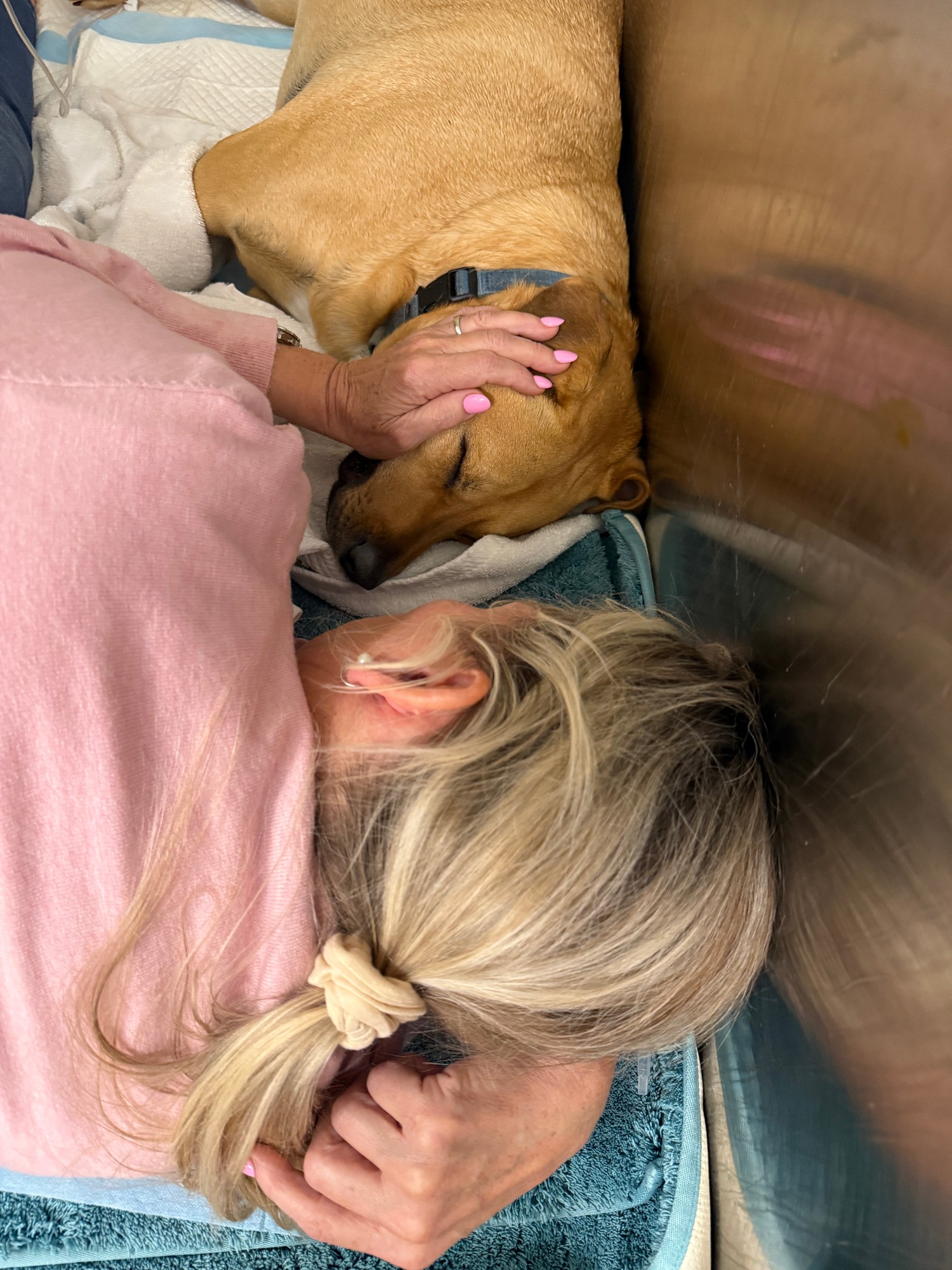
I want to be clear: Dr. Preston was the hero of this story. She read the chart. She made the call. She did her job. The information she acted on was the same information that had been available to two other physicians for 18 hours before her. Same chart. Same hospital. Same protocol. Different decisions.
Dr. Wicinas was in the hospital that morning. She did not acknowledge me — she did not make eye contact with me or say one word. Think about that. To me, that means something.
Saturday Evening
Discharge
Teddy was sent home with dried feces covering his rear end and tail. After nearly $5,900 in charges and a multi-day hospitalization at a Mars Veterinary Health facility, that is the condition my dog came home in.
Saturday night at 8:30 PM, his fever spiked back up to 104°F. I called BluePearl. A technician told us to apply rubbing alcohol to Teddy's paw pads — an outdated and potentially harmful practice. I did not follow that advice. Instead I started putting wet lukewarm towels on Teddy, getting his body damp so as the water evaporated it would cool him down. Thankfully it worked.
BluePearl never called to check on Teddy, to see how he was doing after discharge. Not once.
The Days After
Coming home a different dog
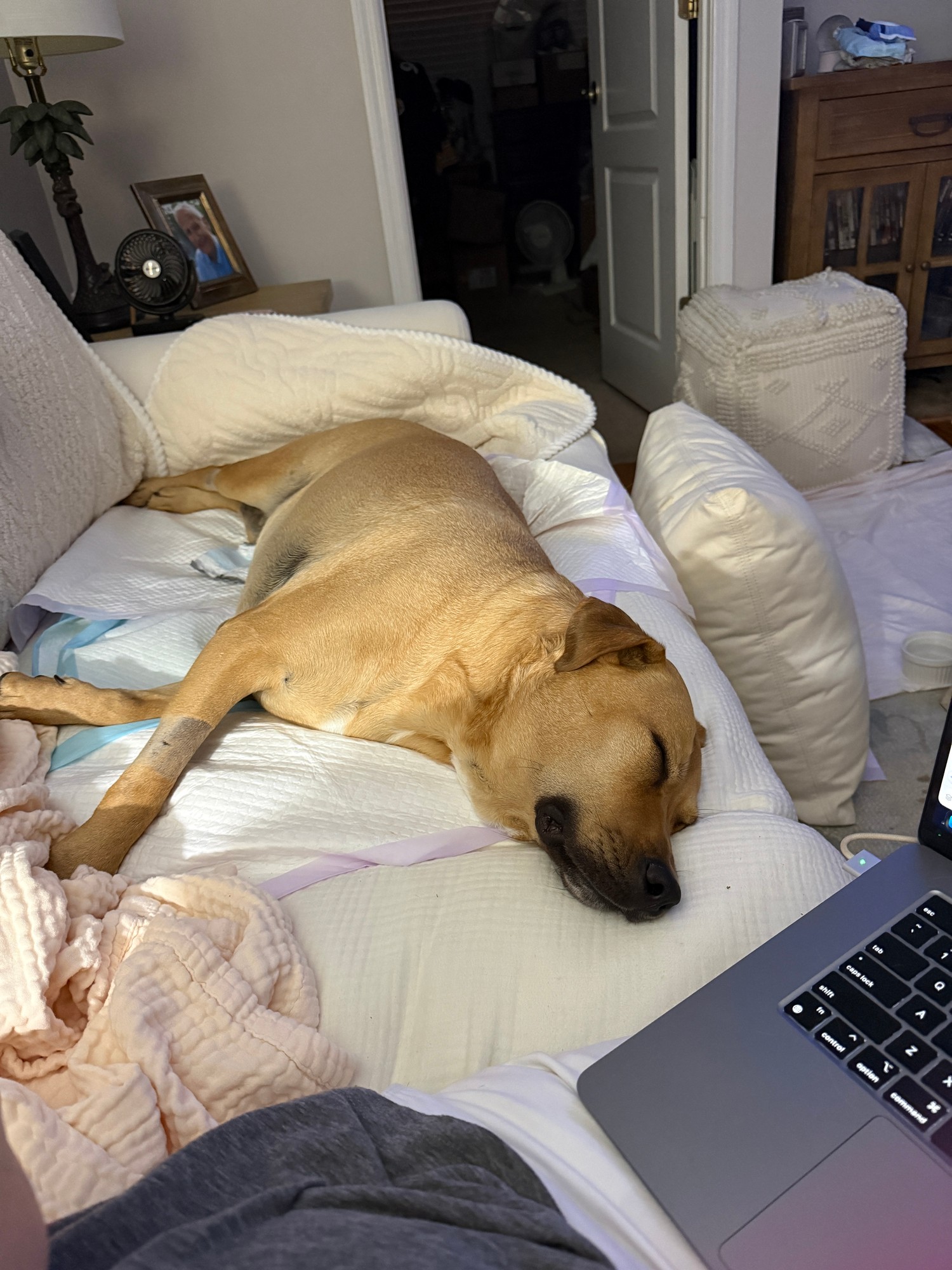
Teddy came home a different dog. He had urinary incontinence. We had to potty train him all over again, from scratch, as if he were a puppy. His hind legs — already vulnerable from his rescue history — would not support him. He was skittish, hypervigilant. For days he did not seem to recognize us. He was traumatized. His vision was affected. I sobbed.
I slept on the couch in the same room with him because he could not be alone, and because I could not bear to be away from him. He was so traumatized I could not even consider leaving him in another room overnight. We pulled out his kennel and had him sleep in it next to our bed; that helped. After a week, we were able to keep the kennel door open so he could choose where to sleep. Our short-haired boy who used to be chilly from the AC, who loved to snuggle under blankets and cruise outside to bask in the sun, was now always hot, panting, constantly thirsty and starving. He lost 8 pounds during his short hospitalization — a testament to the extreme trauma he experienced
My husband and I both had PTSD immediately after getting Teddy home. I could not shake the visions of visiting Teddy during the 18 hours he had suffered at BluePearl. I had been there with him two or three times during that stretch, not realizing what was happening to him — not knowing yet that an affordable treatment had been recommended and not communicated to us. When I visited, Teddy would calm down. Every time, they told us we couldn't stay long. I didn't listen. I would stay for an hour or longer before leaving. He stayed in their hospital, suffering, because I trusted the doctors caring for him. I believed they knew what they were doing. I believed they cared. Looking back, I see how misplaced that trust was.
After we brought him home, the images of him in that hospital — pacing, drooling, frantic with extreme sensitivity to every touch and sound, not sleeping, not knowing why I kept leaving — would not let us sleep. I had left him there. I had left him there over and over again, because that is what you do when your dog is in a hospital. It is heart-wrenching to know now what those hours were and what they did not have to be. He couldn't tell us. He counted on us to protect him, and we failed. I don't want another person to go through the same or worse.
After three weeks under the supervision of Dr. Chris Levine, we weaned Teddy off the anti-seizure meds successfully. We saw small parts of Teddy slowly emerge. Hope returned.
Who is BluePearl really?
Before I tell you what came next, I need to tell you who BluePearl actually is.
BluePearl Veterinary Hospital is not a local clinic. It is one of many veterinary brands owned by Mars Veterinary Health — the veterinary division of Mars, Incorporated, one of the largest privately held companies in the world.
The same Mars that makes M&M's, Snickers, Skittles, and Twix.
The same Mars that owns the pet food brands Pedigree, Iams, Eukanuba, Royal Canin, Cesar, Greenies, and Whiskas.
And through Mars Veterinary Health, the same Mars also owns Banfield Pet Hospital (over 1,000 U.S. locations, most of them inside PetSmart stores), VCA Animal Hospitals (roughly 1,000 more U.S. locations, acquired in 2017 for $9.1 billion).
The same parent company owns the food your dog eats, the lab that runs your dog's bloodwork, and the emergency hospital you rush to in the middle of the night. They are answerable to no public shareholders. They are answerable to the Mars family.
That is the scale of who you are dealing with when you walk through BluePearl's doors. And it is the scale of the institution that has so far chosen not to respond to my formal complaint.
Shocking — What I learned afterward
After Teddy came home, I couldn't stop asking the same question. How did two veterinarians, with the right treatment recommendation sitting in front of them, choose differently? Why did both doctors choose not to tell us what the next-best treatment was, when they knew the MRI was not financially possible for us? How could a third vet read the same chart and act on it within minutes — while the first two physicians did not act on it for 18 hours?
So I started searching. And here is what I found.
In researching corporate veterinary medicine, I found that production-based compensation models are common throughout the industry.
From my research, paying veterinarians bonuses tied to the bills they generate appears to be common at many large corporate veterinary emergency hospitals — meaning compensation may be tied in part to the revenue generated by a veterinarian's services. This kind of compensation structure has been discussed in veterinary industry trade publications.
After reviewing Teddy's records and the decisions made during his hospitalization, I have questions about whether financial considerations may have influenced the options that were presented to us. I cannot know what motivated any individual physician. I can only describe the timeline, the documented recommendations, and the questions that remain for our family.
Once I understood it, I found it difficult not to view some of the decisions made by Dr. Cantrell and Dr. Wicinas through that lens. From my perspective, the pattern of behavior I witnessed seemed consistent with financial incentives that favored advanced diagnostics. I cannot help but wonder whether the incentive to recommend a $6,000 MRI was greater than the incentive to pursue antibiotics and steroids first, despite those treatments costing only a fraction as much. That realization has been deeply troubling.
During the final hours of her overnight shift, Dr. Wicinas added approximately $1,200 in additional charges to our bill, including a stat X-ray (3 images) after Teddy had coughed a few times and two doses of phenobarbital that were administered despite our discussion the night prior about the severe side effects — and Dr. Wicinas herself had advised against using it for Teddy, and we agreed: no phenobarbital for Teddy. To us, these decisions appeared difficult to justify under the circumstances. Whether intentionally or not, the compensation structure seems capable of encouraging additional testing and treatment that may not always align with what a family believes is the most appropriate course of care. That is certainly how it felt to us.
There is one additional fact that I believe is relevant. At admission on Thursday night, I informed Dr. Wicinas that we had pet insurance. What was never discussed was that our policy is reimbursement-based. We are required to pay all expenses upfront and are reimbursed later for a percentage of the cost. At the time, we did not have $6,000 readily available for an MRI, particularly after already paying BluePearl $1,700 on Thursday, March 5, and another $4,100 on Friday, March 6, for Teddy's re-admission. We repeatedly communicated that our financial resources were limited. Yet from my perspective, once “pet insurance” became part of the discussion, it seemed that our financial constraints were not fully considered. Whether that perception is accurate or not, I came away feeling that our ability to pay was assumed rather than discussed.
Looking back, this is what stands out most to us. I prepaid the required $4,100 to admit Teddy on Friday morning. Later that afternoon, two specialists recommended a treatment plan involving antibiotics and steroids that was far less expensive than an MRI. In my view, had our concerns about affordability been taken seriously and that treatment been started promptly, Teddy may not have needed to remain hospitalized overnight and a substantial portion of the prepaid amount would have been refunded.
When I review the timeline today, knowing everything I know now, I am left with serious questions about whether financial considerations played a role in the decisions surrounding Teddy's care. Whether that influence was conscious or unconscious, it continues to raise questions that I have not been able to answer.
Our family feels violated. Not in a small way — in a fundamental way. We were never fully informed of the two neurologists' complete recommendation. We were told about the $6,000 MRI workup. We were not told about the affordable antibiotic-and-steroid alternative those same specialists had recommended for exactly our circumstances. Without that information, we could not make an informed decision about Teddy's care. The choice that should have been ours — as Teddy's family, as the people responsible for him — was made for us, by silence.
I'm appalled. My poor Teddy. I praise God for Dr. Alya Preston.
I wish I had known then what I know now. Please — learn from our heartache and Teddy's suffering.
What I do know is this.
When I arrived at BluePearl on Saturday morning — once Dr. Preston had finally given Teddy the antibiotics and steroids, within 90 minutes, Teddy was, for the first time in 36 hours, peaceful and sleeping with me right by his side — Dr. Wicinas was in the hospital. She saw us arrive. She did not speak to us. She did not make eye contact. She did not acknowledge us in any way.
I will never understand how Teddy's suffering could be overlooked for so long.
April 25, 2026
The formal complaint
On April 25, 2026, I sent a detailed nine-page formal complaint to BluePearl Veterinary Hospital's Medical Director. I included a timeline, a summary, supporting medical records, and an independent clinical summary from Dr. Chris Levine, DACVIM — the same neurologist BluePearl had consulted during Teddy's hospitalization.
Dr. Levine wrote, in his own clinical record:
“Neurology had recommended initiation of clindamycin and prednisone, though this was not initially communicated; once a criticalist assumed care, midazolam was discontinued, Keppra was continued, and clindamycin and prednisone were initiated, resulting in rapid clinical improvement.”
The same physician on both ends of the consult. The same physician who has now documented, in a clinical record, what was recommended and what was not initially communicated.
I gave BluePearl 10 business days to respond.
April 28 — Roxanne acknowledges
Three days later, Roxanne Gainey, Client Service Manager at BluePearl Sarasota, emailed us. She told us our concerns were being “thoroughly reviewed by our hospital leadership team and medical experts to ensure the most appropriate and comprehensive response.”She said BluePearl would follow up “as soon as we have completed our review.”
I waited.
May 8 — The 10-business-day deadline passes
Silence.
May 11 — I send a follow-up
I gave BluePearl until end of business Wednesday, May 13 to respond.
May 13, 2026
Silence.
Where this goes next
I am filing formal complaints with each of the following:
- The Florida Veterinary Medical Board
- The Florida Veterinary Medical Association
- Mars Veterinary Health (BluePearl's corporate parent)
- The Better Business Bureau
I am posting reviews on every platform I can find.
My goal is education — like a public service announcement. Before this happened to Teddy, we had no idea what corporate veterinary medicine actually was. We thought we were going to a hospital. We didn't know about the parent company. We didn't know about the compensation structures. We didn't know what questions to ask. We learned all of that through heartbreak. We are sharing it now so other families don't have to. Our pets are part of our families — they deserve advocates who know what we did not know.
And I am telling you Teddy's story.
Our Recommendation:
Seek a privately owned emergency vet hospital instead
This is not about money. Teddy is home.
This is about the next family that walks into BluePearl Sarasota at midnight with a frightened animal and a credit card.
The next family that gets the cremation invoice while their dog is still alive. The next family that may find themselves in circumstances similar to ours.
This is about Teddy too. He cannot speak for himself. So I am speaking for him.
Where Teddy is now
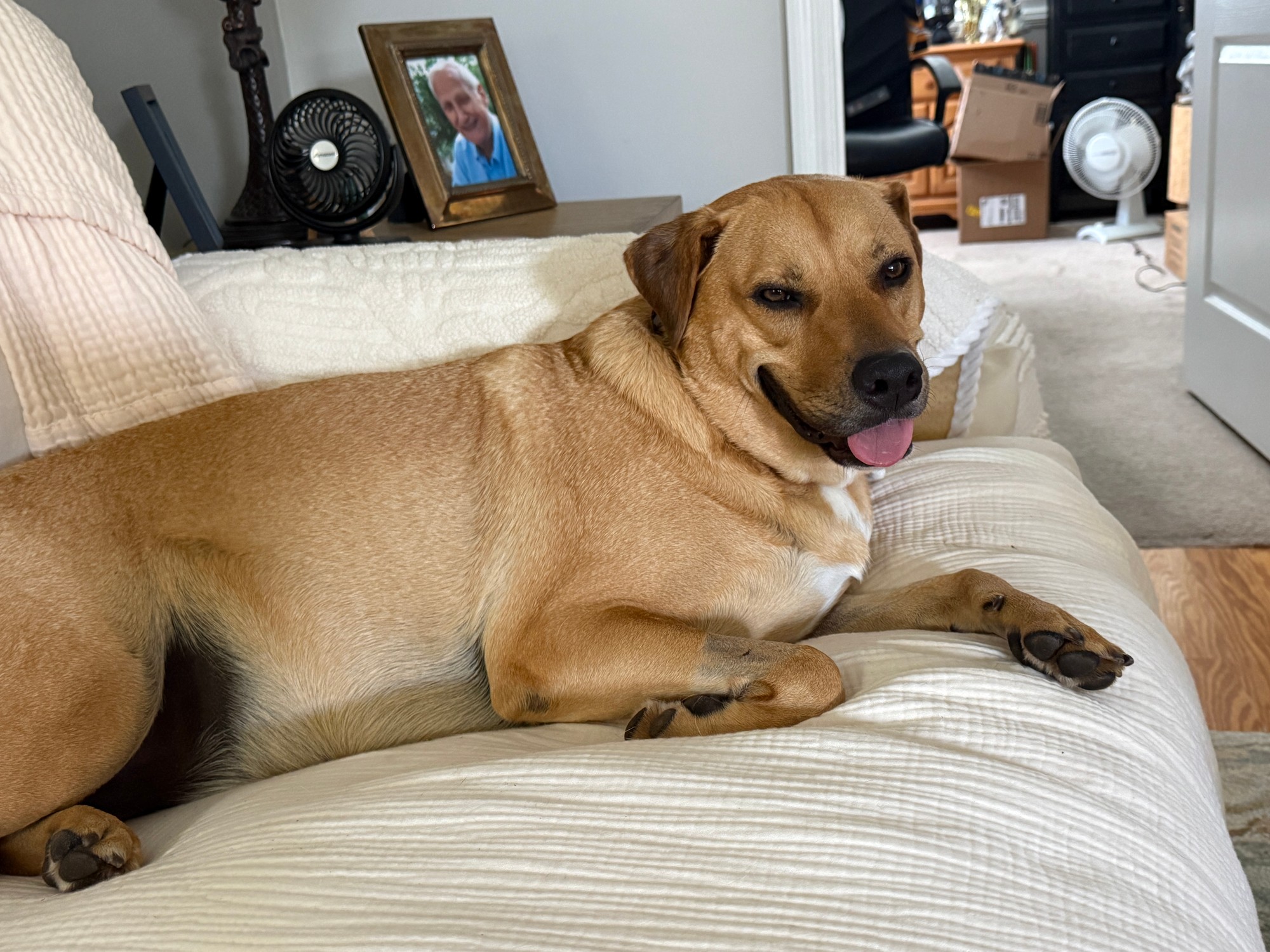
Teddy today — his favorite couch spot
Teddy is recovering. He is not yet sleeping in our bed at night. I get a kiss now and then. He is not fully back. Not yet anyway, but we trust in the Lord — He's been there all along and we know that our love will see him through this season until he is whole.
We are on the final three weeks of weaning him off the steroid. As we reduce the dose, we are seeing more of our Teddy emerge again — the tail wagging, an occasional kiss, the small everyday things that used to be his whole self. The steroid has made him ravenously hungry, which is its own challenge. But the silver lining of that hunger is that he will now eat almost anything. He has always loved steamed green beans. Now he also loves cucumbers, red peppers, hard-boiled eggs, blueberries, and yogurt.
He has good days and better days ahead. He is still our brave, sweet, incredibly loving furbaby!
Whatever else happens — he is loved. And he is home.
UPDATE: June 8, 2026
Teddy is finally off all medicine! 🎉 We've had a bumpy recovery road with some struggles, but he's slowly gaining his confidence back! He still has moments of insecurity and becomes afraid. It breaks me up because this happy go lucky, loving, sweet boy is not fully over the extreme trauma he endured at BluePearl. As a family we are recovering. It's been hard. As each day passes and we get farther away from the horrific experience, we see more and more of his personality emerging. He's happy, he's recovering, he's so loved and we praise God for this little boy!!
UPDATE: August 1, 2026
Teddy is doing remarkably well but still has a ways to go to fully recover. He still gets scared easily and has moments of skittishness, but he is gaining his confidence day by day. He still struggles to get up and walk after sleeping awhile but each day he's getting stronger. He is now able to go on both the morning and early evening walks with his big brother — that's huge. Lots of neighbors know Teddy now and his story and are cheering him on frequently when we see them on our walks. We are hoping to get Teddy back into Aqua Therapy soon. Oh and I'm so excited to share that Teddy had a mini zoomie the other day — it was so stinking cute! We are praying as time passes, he'll get back to his fun loving, crazy little self — we keep seeing glimmers and moments of his personality all the time now. He's come a long way and we are so thankful! 🙏
Other voices
Have you had a similar experience? Other pet owners deserve to know they are not alone.
Share your story
If you or someone you know has had a similar experience, we want to hear from you. Stories are reviewed before appearing here.
View comments and stories on our Reddit Community post r/sarasota — Avoid Blue Pearl Pet Hospitals
Join our Facebook Group BluePearl Bad Experiences